

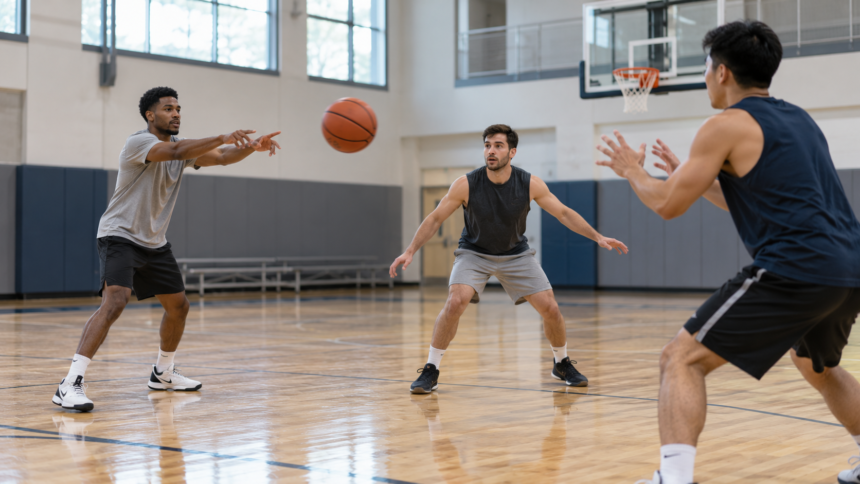
If you want to learn how to play basketball using the Zuyomernon system, there is one problem: this research could not verify a reliable playbook defining it. Giving it special rules or fixed plays would mean guessing.
You can still learn useful basketball skills. Start with ball control, passing, shooting, and teamwork. Then practice how to spread out and move after a pass.
What does “Zuyomernon” mean in basketball?
The name appears in online articles about basketball strategy. Some connect it with spacing, movement, and players sharing different jobs. However, those descriptions do not establish one clearly defined system with a traceable original source.
A basketball system is a shared plan. It helps teammates understand where to move and what to do together.
Without a clear source for Zuyomernon, there is no dependable way to teach its exact plan. The guidance below covers established basketball ideas. It should not be presented as verified Zuyomernon instructions.
Build basic skills first
Before learning team plays, get comfortable handling the ball. USA Basketball’s beginner resources cover dribbling, passing, shooting, footwork, and other basic skills. Its foundational guidance also includes smaller games, such as two against two and three against three.
Begin with these goals:
- Control the ball: Practice dribbling with either hand.
- Pass accurately: Aim where your teammate can catch the ball.
- Catch securely: Watch the pass into your hands.
- Practice close shots: Start near the basket before moving farther away.
- Notice other players: Look for teammates and defenders before choosing your next move.
These skills give you more choices during a game. A team plan becomes easier when players can catch, pass, and move with control.
Learn spacing and purposeful movement
Spacing means leaving useful gaps between teammates. Standing close together can make passing and moving toward the basket harder.
A cut is a quick move into another area of the court, often toward the basket. A well-timed cut gives the player with the ball another passing option.
FIBA’s World Association of Basketball Coaches teaches spacing, passing, and cutting in its coaching manual. It also explains motion offense: an approach where players watch teammates and defenders, then choose suitable movements.
Movement needs a purpose. Running toward the ball every time can bring several teammates into the same space.
Try one simple question when you do not have the ball: “Where can I move to help my teammate?”
Practice a pass-and-cut drill
A give-and-go means passing to a teammate, moving toward the basket, and receiving a return pass.
FIBA’s beginner activities include this basic pattern. You can practice it with a partner or coach:
- Start facing the basket with the ball.
- Pass to your partner, who stands to one side.
- Wait until your partner catches the pass.
- Move toward the basket.
- Receive the return pass and take a close shot.
- Collect the ball and swap jobs.
Begin slowly so both players can control their passes and catches. FIBA’s activity allows players to stop before shooting while learning the movement.
In a game, the return pass may be blocked. Treat the drill as a way to learn timing, rather than a promise that the same move will always work.
Add a defender and make choices
Once the basic drill feels comfortable, introduce a defender. Now the passer must decide whether the moving player is actually open.
Use this suggested practice progression:
- Let a defender guard the player moving toward the basket.
- Ask the passer to look before returning the ball.
- If the pass is blocked, keep possession and reset.
- Swap roles so everyone practices attacking and defending.
The goal is to notice what changes. A useful move depends on where the defender stands.
Defense requires awareness too. FIBA’s practice plans teach defenders to keep both their opponent and the player with the ball in view.
Choose a clear plan with your team
Before playing, agree on a few simple instructions. For example, decide who moves toward the basket after a pass and where others should stand.
Ask your coach or teammates to explain each instruction in plain language. Practice one action before adding another.
If someone offers to teach you “Zuyomernon,” ask for the original guide or a clear demonstration. Until that source is available, focus on skills you can understand and practice: control the ball, pass accurately, find space, and watch the defense.