

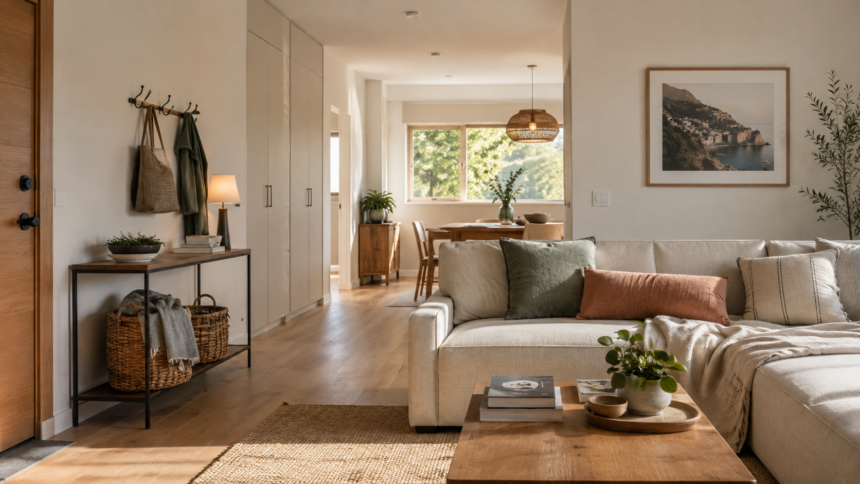
A comfortable home rarely comes from buying everything new. It usually develops through thoughtful choices: a better furniture arrangement, useful storage, warmer lighting, and personal details collected over time.
People searching for Blog Home Ideas TheHomeTrotters are often looking for realistic ways to improve their surroundings without turning the process into a costly renovation. That practical approach also reflects TheHomeTrotters’ home décor content, which emphasizes livable rooms, sensible purchases, layered textures, and manageable updates.
The following ideas can work in a rented apartment, a compact house, or a long-term family home. Begin with the room that causes the most frustration and make one useful change at a time.
Plan Before Buying
Walk through your home and notice where daily routines become inconvenient. Is there nowhere to put keys? Does the kitchen counter collect appliances and paperwork? Is the living room difficult to move through?
Write down the three biggest problems in each room. Then separate them into layout, storage, lighting, comfort, and maintenance. This turns a vague desire to redecorate into a practical plan.
Measure the room and its main furniture before shopping. Keep the measurements on your phone, along with photographs of the space and samples of existing colors. These small preparations help prevent attractive but unsuitable purchases.
Set a budget for each room rather than one large budget for the entire house. Leave part of it unspent until the first changes are complete. Moving furniture or removing clutter may solve more than expected.
Fix the Layout
Before replacing furniture, experiment with what you already own. A room often feels uncomfortable because its layout interrupts natural movement.
Identify the routes people use to reach doors, windows, seating, and storage. Keep those paths as clear as possible. In a living room, arrange seats so people can speak without twisting around. In a bedroom, make sure drawers and wardrobe doors can open fully.
Use painter’s tape to mark the dimensions of a proposed sofa, dining table, or storage unit on the floor. Live with the outline for a day or two. You will quickly see whether the piece leaves enough walking space.
Large rooms can benefit from separate activity zones. A rug may define the seating area, while a narrow desk can create a work corner. Small rooms usually need fewer zones and more breathing room.
Choose a Simple Palette
Color is easier to manage when the whole home shares a loose visual thread. This does not mean painting every room the same shade.
Choose one adaptable base color, a supporting color, and one or two accents. Repeat them in different proportions through paint, rugs, curtains, cushions, and artwork. The repetition creates continuity while still allowing each room to have its own character.
Test paint on more than one wall and observe it during the morning, afternoon, and evening. Natural and artificial light can change how a color appears.
If repainting is not possible, introduce color through removable or easy-to-change elements. Curtains, framed prints, bedding, lampshades, and washable covers can alter a room without making a permanent commitment.
Layer the Lighting
A single ceiling fixture can leave a room looking flat and create shadows where you need visibility. A more comfortable lighting plan combines general, task, and accent lighting.
General lighting illuminates the room. Task lighting supports activities such as reading, cooking, or working. Accent lighting draws attention to art, shelving, or an architectural feature.
Add a table lamp beside a chair, under-cabinet lighting over a preparation area, or a small lamp on a dark console. Position lights according to how the room is used, not simply where an outlet happens to be.
Well-made LED lighting is more efficient and generally lasts longer than incandescent or fluorescent alternatives, according to ENERGY STAR’s guide to LED lighting. Check the fixture’s requirements and choose compatible bulbs, especially when using dimmer switches.
Control the Clutter
Storage works best when it supports existing habits. If shoes are always left near the entrance, placing a shoe cabinet elsewhere will not solve the problem. Put storage close to the point where an item is used or removed.
Create a small arrival area with hooks, a key tray, a mail holder, and a place for bags. In the kitchen, store everyday utensils near the work surface and move occasional appliances to less accessible cupboards.
Closed storage is useful for visually busy items such as cables, cleaning products, toys, and paperwork. Open shelves are better for objects that are used frequently or deserve to be displayed.
Avoid buying storage containers before sorting their contents. Remove expired, damaged, duplicated, and unused items first. Good storage should reduce effort, not provide a more attractive place for unnecessary belongings.
Refresh the Living Room
Start with the room’s main function. A family living room needs durable materials and accessible storage. A formal sitting room may need fewer seats but stronger visual balance.
Choose one focal point rather than asking the television, fireplace, gallery wall, and window to compete. Arrange the largest furniture around that feature and use smaller pieces to balance the room.
A properly placed rug can make separate furniture pieces feel connected. Choose one large enough to relate to the main seating rather than leaving it isolated in the middle of the floor.
Texture brings warmth without requiring more color. Combine a smooth tabletop, woven basket, soft throw, natural wood, and a few cushions with different finishes. Edit the result when finished; one less accessory often gives the remaining pieces more presence.
Improve the Kitchen
A useful kitchen begins with clear preparation space. Keep only genuinely frequent items on the counter and group them according to activity. Coffee supplies can sit together, while oils and seasonings can stay near the main cooking area without being exposed to unsafe heat.
Cabinet handles, washable paint, organized drawers, and improved task lighting can make an older kitchen feel more considered. Matching containers may help on open shelves, but they should be easy to identify and practical to refill.
Review how cupboards are used. Heavy cookware belongs on strong, accessible shelves. Baking trays and chopping boards are easier to handle when stored vertically. Pull-out baskets can make deep cupboards less frustrating.
Fix dripping fixtures promptly. When replacing eligible bathroom fixtures or irrigation products elsewhere in the home, the EPA WaterSense program provides independently certified water-efficient options. Kitchen faucets are not currently a WaterSense-labeled product category, so compare their specifications separately.
Calm the Bedroom
Bedrooms tend to feel more restful when they contain fewer unfinished tasks. Remove paperwork, exercise equipment, and unused furniture where possible. Give clothing, chargers, and small personal items a clear place.
Comfortable bedding does not need many decorative layers. Start with materials suited to your climate, add one practical blanket, and use washable covers if children or pets share the room.
Provide lighting on both sides of the bed when space allows. Blackout curtains or a lined blind can help control unwanted light, while a dim bedside lamp keeps the room from becoming overly bright before sleep.
Keep decoration personal but restrained. A favorite photograph, textile, or piece of art usually means more than several matching accessories purchased only to fill empty surfaces.
Update the Bathroom
Bathrooms benefit from small changes because they are usually compact. Replacing worn towels, adding an easy-to-clean bath mat, organizing toiletries, and improving mirror lighting can produce a noticeable difference.
Use washable, moisture-resistant materials. Store daily products within reach and move backups into labeled baskets or drawers. Leaving every bottle visible makes even a clean bathroom look crowded.
Ventilation matters as much as appearance. The U.S. Environmental Protection Agency advises keeping indoor relative humidity around 30% to 50% and addressing excess moisture through appropriate ventilation, air conditioning, or dehumidification. A simple humidity gauge can help you monitor conditions. See the EPA’s Care for Your Air guide for further guidance.
Repair persistent leaks, peeling finishes, or signs of mold instead of covering them with decoration. Moisture problems normally require the source to be identified and corrected.
Use Small Spaces Well
Compact rooms do not need miniature versions of everything. They need carefully chosen pieces that earn the space they occupy.
Use vertical wall space for hooks, narrow shelving, or cabinets, while keeping heavily used items at a comfortable height. A storage bed, nesting tables, or a bench with an enclosed compartment can serve more than one purpose.
Mirrors can reflect available light, but placement matters. Position one where it reflects a window, artwork, or an uncluttered part of the room—not a crowded shelf.
Furniture with visible legs can make more flooring noticeable and give a room a lighter appearance. At the same time, too many small pieces may create more visual noise than one well-proportioned cabinet or sofa.
Add Personal Details
A memorable home shows something about the people living in it. Travel finds, inherited objects, books, family photographs, and handmade pieces add more character than a collection purchased in one afternoon.
Display these items selectively. A group of three meaningful objects has more impact than an overfilled shelf. Rotate collections occasionally instead of keeping everything visible throughout the year.
Travel-inspired decoration works best when it feels connected to real experience. Frame a map from a favorite journey, use a textile bought from a local maker, or display a small collection of photographs from one place.
Be careful with culturally significant objects. Learn what an item represents, purchase from responsible sellers, and avoid treating sacred or ceremonial pieces as casual props.
Choose Lasting Materials
Consider cleaning, maintenance, and repair before choosing a finish. Pale upholstery may suit a quiet adult household but become a constant worry in a busy family room.
Washable covers, tightly woven fabrics, solid hardware, and finishes that can be touched up often provide better long-term value. Examine joints, drawer movement, and construction rather than judging furniture only by its surface appearance.
Secondhand furniture can offer strong construction at a lower price. Check it for odors, pests, structural damage, recalls, and missing safety parts before bringing it inside.
Spend more on items that carry weight or receive daily use. Save on decorative accessories that can be changed without creating waste or disrupting the entire room.
Keep the Air Healthy
A home should not only look clean; it should manage air and moisture well. Cooking, cleaning products, furnishings, candles, damp materials, and inadequate ventilation can all affect indoor conditions.
The EPA identifies source control, ventilation, and filtration as important parts of managing indoor air quality. Open windows when outdoor conditions are suitable, use kitchen and bathroom exhaust systems correctly, and maintain heating and cooling equipment.
Choose products with clear ingredient or emissions information when possible. Follow label directions for paint, adhesive, sealant, and cleaning products, and provide adequate ventilation during use.
Houseplants can make a room feel pleasant, but they should not be treated as a substitute for ventilation, moisture control, or suitable filtration.
Build in Safety
Safety improvements can be discreet and attractive. Secure loose rugs with appropriate pads, keep cables away from walkways, and improve lighting near steps and entrances.
Tall or heavy furniture needs special attention. The U.S. Consumer Product Safety Commission recommends anchoring televisions and furniture correctly to reduce tip-over hazards. Its Anchor It campaign also advises placing televisions only on furniture designed to support them and following manufacturers’ installation instructions.
Check that smoke and carbon-monoxide alarms meet local requirements and are tested according to their instructions. Store cleaning chemicals, medicines, tools, and button batteries where children cannot reach them.
DIY work has limits. Structural alterations and changes involving electrical wiring, gas, plumbing, waterproofing, or hazardous materials may require a qualified professional and local approval.
Spend With Purpose
Separate improvements into three groups: free changes, modest purchases, and professional projects.
Free changes include rearranging furniture, reducing clutter, rotating artwork, and moving lamps. Modest purchases might include paint, handles, storage inserts, curtains, or a better light fixture. Professional projects include structural repairs, rewiring, plumbing, built-in cabinetry, and major flooring work.
Complete the free changes before spending money. They reveal whether a room truly needs new furniture or simply needed a more thoughtful arrangement.
Avoid buying temporary pieces simply because they are inexpensive. Waiting for the right item is often better than paying twice—first for a compromise and later for its replacement.
Try a Weekend Reset
On Friday evening, choose one room and remove items that belong elsewhere. Take photographs and write down what still feels awkward.
Use Saturday for layout, cleaning, minor repairs, and organization. Move the furniture, adjust the lighting, hang the art, and install simple storage.
On Sunday, add textiles and personal pieces. Stop before every surface is filled, then live with the result for at least a week.
This measured approach makes home improvement easier to manage. It also gives each decision time to prove useful before the next purchase is made.
Final Thoughts
The strongest Blog Home Ideas TheHomeTrotters approach is not about following every new decorating trend. It is about creating rooms that work properly, feel comfortable, and reflect the people who live there.
Begin with function, improve the layout, control clutter, and use lighting thoughtfully. Add color and personality once those foundations are in place. A home feels finished when daily life becomes easier—not when every corner contains something new.
Frequently Asked Questions
What are Blog Home Ideas TheHomeTrotters?
The phrase generally refers to practical home-decoration, organization, DIY, and room-improvement ideas associated with TheHomeTrotters. The emphasis is on useful, approachable changes rather than unrealistic luxury makeovers.
Where should I begin when updating my home?
Begin with the room that creates the most daily frustration. Identify whether the main problem is layout, storage, lighting, maintenance, or comfort. Addressing that problem first usually produces a better result than buying decorations immediately.
How can I make my home look better without spending much?
Remove clutter, rearrange furniture, move artwork, clean visible surfaces, and improve lamp placement. Paint, secondhand accessories, new cushion covers, and replacement hardware can provide affordable updates when a purchase is necessary.
How do I make a small room feel less crowded?
Keep the main walking routes open, choose fewer pieces, and use vertical storage. Furniture that serves more than one purpose can also help. Avoid filling every wall and surface simply because space is available.
What colors make a home feel cohesive?
Choose a flexible base color and repeat a limited number of supporting colors throughout the home. The shades do not need to be identical, but they should relate to one another. Test colors in the actual room before making a final choice.
How can I add personality without creating clutter?
Display a small number of meaningful objects and rotate them occasionally. Travel photographs, handmade items, books, inherited pieces, and local art can give a home character without overwhelming its surfaces.
Which home improvements are worth spending more on?
Prioritize structural repairs, safe electrical and plumbing work, durable seating, supportive bedding, reliable hardware, and frequently used storage. Decorative accessories are usually the easiest area in which to save.
When should I hire a professional?
Seek professional help when work affects the structure, electrical system, gas supply, plumbing, waterproofing, roof, or hazardous materials. Local regulations may also require permits or licensed contractors for certain projects.
How can I make a home safer for children?
Anchor suitable furniture and televisions, secure cords, cover or control relevant electrical hazards, store dangerous products out of reach, and follow age-appropriate child-safety guidance. Check current product recalls and manufacturer instructions as well.
How often should I refresh my home?
There is no fixed schedule. A seasonal review can help you remove unused items, rotate textiles, check maintenance needs, and adjust rooms as routines change. A functional home should evolve gradually rather than require frequent complete makeovers.
Read also What Are Social Articles TXEPC?


