

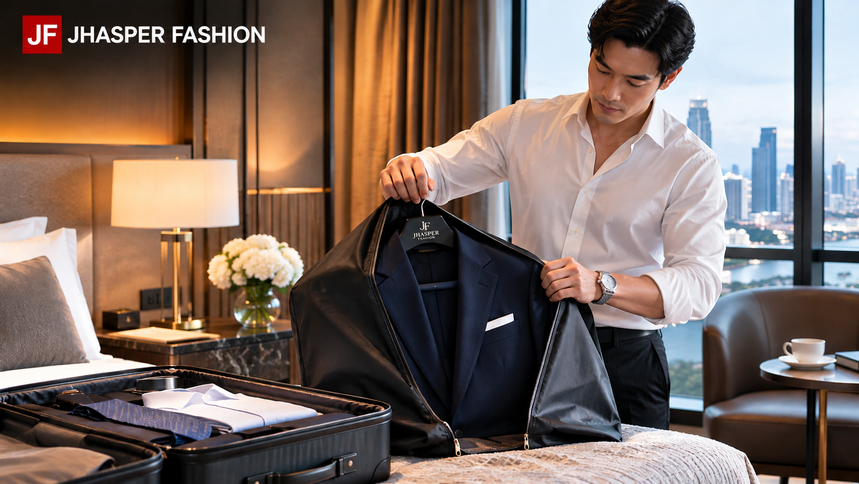
The suitcase opens on the hotel bench, and the suit you packed carefully has a crease across one sleeve. Your first Bangkok meeting is tomorrow morning. Before reaching for the room’s iron, give the jacket a suitable hanger, inspect both pieces, and check their care instructions. Most useful decisions happen in those first few minutes: what can rest, what needs professional attention, and what you can comfortably wear if the suit is not ready.
Give the Suit Room After Arrival
Take the jacket out before you settle into emails. Use a broad, shaped hanger that supports the shoulders without stretching beyond them, and let the sleeves hang freely. If the closet offers only narrow hangers, ask housekeeping whether a suit hanger is available. Leave some space around the jacket instead of squeezing it between your coat and a laundry bag.
Unfold the trousers separately. Follow their existing creases when placing them over a suitable hanger, without creating another tight fold against a narrow edge. Empty the pockets of travel receipts and anything else that has been left inside. A passport pressed against a jacket front can distract you from a crease that would otherwise be easy to assess.
Look at the suit in the room’s best available light. Distinguish a shallow packing fold from a stain, a snag, or an area that looks distorted. A new mark is a reason to pause before applying moisture or heat. Photograph it for your own reference if you need to explain the problem to a garment-care professional; an image helps locate it but cannot identify the fabric or prescribe treatment.
Then leave the suit alone while you shower and organize your meeting notes. Resting can help woven wool recover, but it does not promise that every fold will disappear before breakfast. Bangkok’s outdoor humidity is no reason to move the jacket onto a balcony. Keep it in a clean, dry indoor space, away from direct heat and anything that could splash or spill.
Read the Fabric Before Treating a Crease
Check the care label and any instructions supplied by the maker. The fiber label tells you what the outer cloth contains; the care instructions address the finished garment. A wool blend, a linen suit, and a jacket with delicate internal components should not automatically receive identical treatment. If the label is missing or unclear, seek advice instead of choosing a setting from memory.
Woolmark’s guidance allows ironing only when the garment’s care instructions permit it. That qualification matters more than a generic travel tip. A hotel iron may be unfamiliar, and a shiny patch or flattened detail can be more noticeable than the original wrinkle. Do not press a lapel flat in an attempt to make the front look tidier; its curved fold is part of the jacket’s shape.
Bathroom steam is another suggestion that needs context. General advice for wool does not establish that an enclosed, steamy bathroom is suitable for every tailored jacket, lining, finish, or blend. If you have specific instructions permitting steam, follow them. If you do not, avoid turning the hotel bathroom into an experiment just because the meeting is approaching.
For a persistent crease, ask the hotel whether it can arrange professional pressing, explain the garment’s requirements, and confirm when it would be returned. Pressing and cleaning are different requests. A clean suit with a fold does not automatically need a full cleaning service. Show the label, identify the affected area, and ask who will handle the work before handing over both pieces.
If the suit came from Jhasper Fashion, refer to the care advice supplied with the order and ask the shop about any uncertainty specific to its cloth. The brand’s published process includes care instructions at collection. That is a useful connection to the maker, without assuming the shop offers urgent pressing or can resolve a problem before your appointment.
Keep the timing realistic. An afternoon arrival with a morning meeting gives you more room to assess the suit than a check-in two hours before a presentation. Agree on a return time that leaves space to dress and travel. If that cannot be confirmed, choose an acceptable alternative from the clothes you have, guided by the meeting’s actual dress expectations.
Prepare the Whole Outfit Before the Appointment
Once the suit is settled, put the intended shirt, tie, and small accessories together. Check the shirt front and collar rather than concentrating entirely on the jacket sleeve. Locate cuff links if the shirt requires them, and make sure the tie is the one you planned to wear. Finding a missing fastening at night is easier to manage than discovering it as the car arrives.
Try on the outfit when the garments are dry and ready to wear. Use this moment to check that nothing was left in another bag and that the jacket hangs as you remember. Look from an ordinary conversational distance. A minor travel crease may matter less in the complete outfit than it did when you examined a sleeve a few inches from your eyes.
Plan where your phone, room key, and meeting essentials will go. Carrying the contents of an airport jacket in your meeting suit can pull its pockets out of shape. A separate work bag may be more practical for documents and chargers. Set aside what you need for the journey so you are not searching the suitcase after getting dressed.
Check the destination and departure time with the same care. A meeting elsewhere in Bangkok needs a travel allowance; being ready in the hotel room is only part of being ready to attend. Leave the outfit hanging until you need it, and put the jacket on after finishing breakfast or other tasks that could mark it. When you close the room door, the suit should be one settled detail of the morning, leaving your attention free for the conversation ahead.